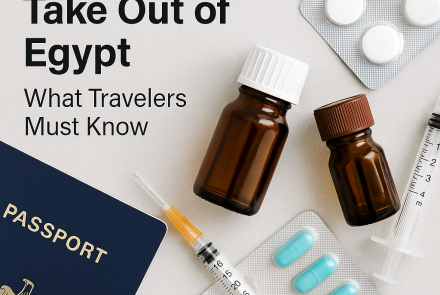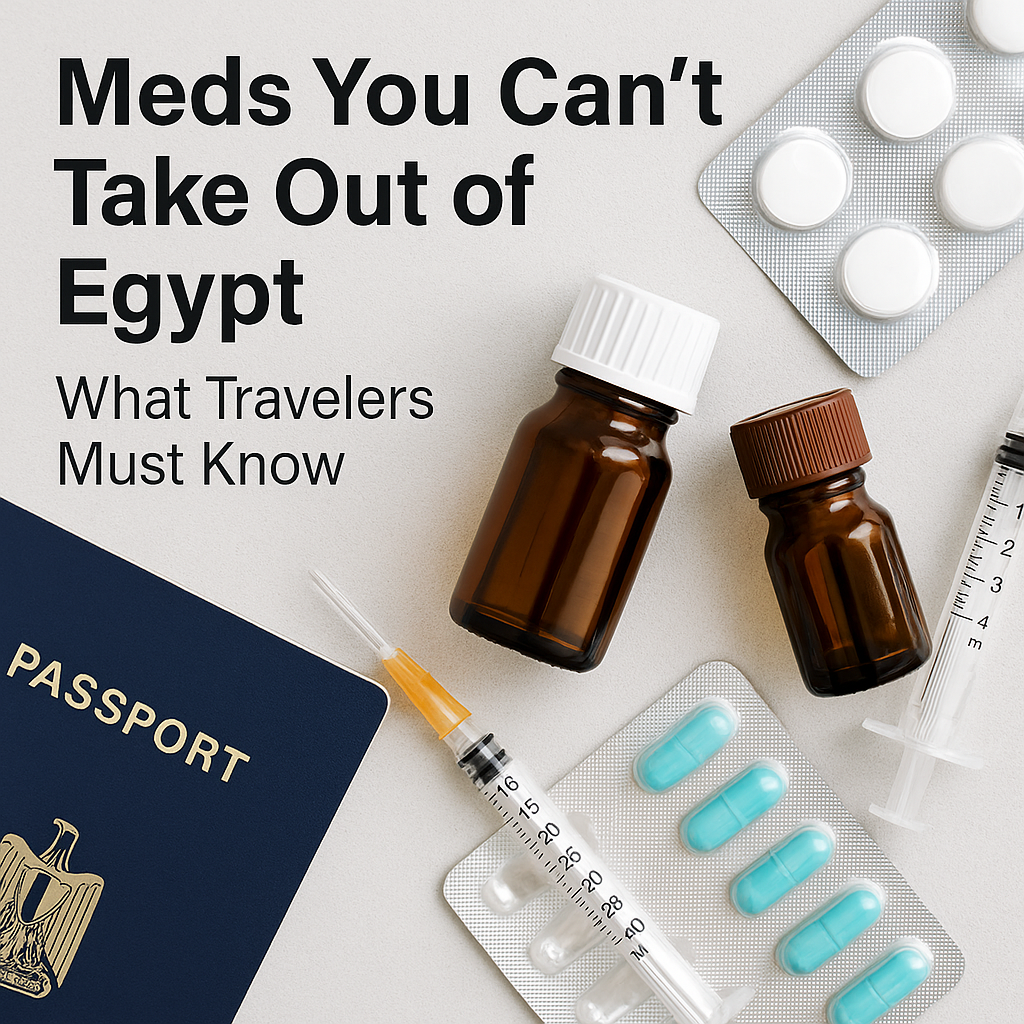
Medications You Can't Take Out of Egypt: What Travelers Must Know
Medicines You Cannot Take Out of Egypt: Updated List for 2024–2026
Why are some medicines banned from being taken out of Egypt?
Many medicines that are sold over the counter in Egypt contain ingredients that are considered narcotic, psychotropic or strictly controlled in other countries. Because of this, medicines banned from being taken out of Egypt are subject to international drug control rules and Egyptian regulations on controlled substances.
Banned medicines (tablets, capsules, injections)
| Medicine | Reason for restriction |
|---|---|
| Nicocodeine | contains codeine |
| Didrex Tablets | central nervous system stimulant |
| PROXEN | codeine-based combination |
| Mogadon | strong sedative / hypnotic |
| NITRAZEN injections | psychotropic medicine |
| KETAMINE INJ | narcotic anaesthetic (controlled) |
| Ergotamine | controlled substance for migraines |
| Dextromethorphan | restricted in a number of countries due to misuse risk |
| Pulmolar | codeine / psychotropic components |
| Co-Diovan | contains controlled substances (combination) |
| Kodinalin | codeine-based medicine |
| Somanil | psychotropic sedative / hypnotic |
| Phenobarbital | barbiturate with psychotropic effect |
| Nova Tablets | codeine / barbiturate combination |
| Valinil | psychotropic medicine |
| Calmepam Tablets | anxiolytic (tranquiliser) |
| Neuril | tranquiliser (benzodiazepine class) |
| Valium | diazepam (benzodiazepine, controlled) |
| Tranxene | tranquiliser (clorazepate) |
| Lexotani / Lexotanil | benzodiazepine (bromazepam) |
| Xanax | alprazolam – psychotropic, strictly controlled |
| Codastin | codeine-based cough medicine |
| Codaphen N | codeine combination |
| Somadril | strong muscle relaxant with abuse potential |
| Tussivan N | codeine-containing cough medicine |
| Korfas tablets | psychotropic medicine (anxiolytic) |
| Migranil Tablets | ergotamine-based migraine medicine |
| Librax | chlordiazepoxide combination (benzodiazepine) |
| Rivotril | clonazepam – psychotropic benzodiazepine |
Banned syrups (since 1 March 2023)
| Syrup | Syrup |
|---|---|
| Congestal syrup | Tusscan syrup |
| Tussivan syrup | Tussilar syrup |
| Codilar syrup | Pentaflu syrup |
| Pentacold syrup | Pulmocare syrup |
| Codiphan syrup | Rhinotus syrup |
| Coldstop syrup | Opticough syrup |
| Bronchotec syrup |
What you can safely take home from Egypt: natural oils as a legal alternative
Many travellers choose natural oils instead of strong medicines — for example black seed oil, argan oil, jojoba oil, amla oil or aloe vera oil. These products are legal to buy and take home from Egypt.
Fun Stay Travel service:
personal consultation and selection — $3, delivery in Hurghada districts — $1–5.
Frequently Asked Questions (FAQ)
Which medicines cannot be taken out of Egypt?
In the tables above you will find an updated list of banned tablets and syrups. Always check the composition on the box before buying.
Which tablets are specifically banned for export from Egypt?
The full list is shown in the tablet table above.
Why is the medicine “123” (One Two Three) considered controversial?
To minimise the risk of questions at customs, travellers usually take only 1 pack and keep the original receipt and box.
How many medicines can I legally take out of Egypt?
How many packs of medicine can I carry from Egypt?
Can I take medicines in my hand luggage?
Banned or controlled medicines (for example codeine-based or psychotropic medicines) are not allowed in either hand luggage or checked baggage.
Have the rules for taking medicines out of Egypt changed for 2024–2025?
Since 2023, several popular cough and cold syrups have been fully banned for export. The tables in this article show the most up-to-date list.
What are the general rules for taking medicines out of Egypt?
• always check the composition on the box and compare it with the tables above;
• keep the original packaging and pharmacy receipts;
• if you have a chronic condition, carry a doctor’s prescription in English;
• check the medicine import rules of your destination country.
Is there an official list of banned medicines in Egypt?
In this article we summarise the current list in a form that is convenient for travellers.
Can I travel with medicines without the original box?
To avoid problems, always keep medicines in their original box until the end of your trip.
If a medicine is sold freely in Egyptian pharmacies, why can’t I take it home?
The fact that a medicine is easy to buy in Egypt does not mean it can be freely taken across borders. Export rules are based on international drug control and the laws of the country you are arriving to, not just Egyptian pharmacy practice.
What happens if airport security finds banned medicines in my luggage?
– the medicine is confiscated;
– a short note may be made in the airport log;
– the traveller is usually allowed to continue their journey.
However, if there is a large quantity or suspicion of commercial intent, security may carry out a longer interview, temporarily detain you for checks, or refer the case to the authorities. To avoid any risk, do not take banned medicines out of Egypt at all.
How can I check if a specific medicine is allowed?
Use the tables in this article as a reference and, if in doubt, ask your doctor, pharmacist or contact your airline or embassy.
Why can’t I take Egyptian cough and cold syrups out of the country?
• pseudoephedrine (precursor chemical),
• codeine (opioid),
• dextromethorphan (may have psychoactive effects in high doses).
Because of this, syrups like Congestal, Coldstop, Bronchotec and several others are on the official list of products that should not be taken out of Egypt. See the syrup table above for details.
Can I replace banned syrups and tablets with safer options?
Safer over-the-counter options:
– medicines without pseudoephedrine;
– syrups that do not contain dextromethorphan;
– simple paracetamol or ibuprofen for pain and fever;
– throat lozenges and saline nasal sprays.
Gentle, plant-based alternatives:
– herbal teas (chamomile, mint),
– valerian or magnesium + B6 (where legal and appropriate).
Natural cosmetic oils you can safely take home:
– black seed oil, argan oil, amla oil, jojoba oil, aloe vera oil. These products are not subject to drug control laws and can be legally taken out of Egypt.
Practical tips: how to take medicines out of Egypt safely
- Take only permitted medicines, and no more than 1–2 packs of each.
- If you have a chronic condition, carry a prescription in English with the doctor’s stamp.
- Keep pharmacy receipts and original packaging until the end of your trip.
- Always check the import rules for medicines in your destination country.
Conclusion
Medicines banned from being taken out of Egypt can cause serious problems at the border if you do not follow the rules. At the same time, buying some medicines in Egypt can be convenient and cost-effective if you choose permitted products and avoid controlled substances.
Fun Stay Travel not only organises excursions in Egypt, but also shares important, practical information for travellers: travel tips and useful articles.
Save our website to your bookmarks and share this article with friends who are planning a trip to Egypt.